Aging in Place Home Design for Northeast Ohio Homeowners
Plan an aging-in-place home in Northeast Ohio with practical ideas for first-floor living, easier entrances, bathrooms, kitchens, & long-term comfort.
11 min read
Lemmon Homes : Published
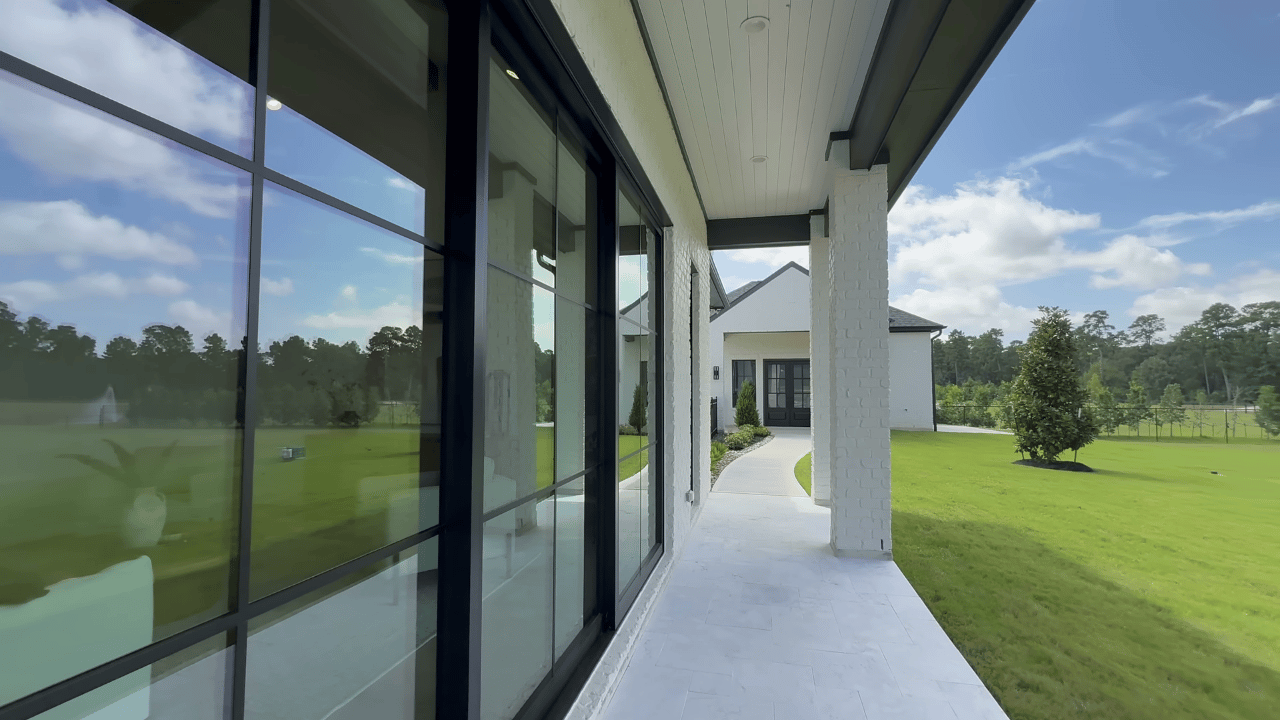
When you're planning a custom home, the construction budget naturally gets a lot of attention. You're comparing floor plans, choosing finishes, considering upgrades, and deciding where to invest in features that matter most to your family.
But the cost of building your home is only part of what you'll spend on it.
Long after construction is complete, you'll continue paying for heating, cooling, electricity, water, maintenance, and eventually the replacement of certain systems. Those expenses accumulate over years of homeownership, which makes the decisions you make during the design process especially important.
Energy-efficient home design gives homeowners an opportunity to manage those long-term costs before construction even begins. Insulation, air sealing, window placement, heating and cooling equipment, and the layout of the home all influence how much energy it takes to keep the space comfortable.
For families building in North Canton, Akron, Canton, and the surrounding Northeast Ohio communities, these decisions carry particular weight. Our region's cold winters create substantial heating demands, while summer temperatures and humidity place additional demands on cooling systems.
A home designed to handle those conditions efficiently can provide lower operating costs, more consistent comfort, and lasting value throughout the years you live in it.
Two custom homes can have similar square footage, floor plans, and finishes while costing different amounts to operate.
One might have a carefully designed insulation and air-sealing system, appropriately sized heating and cooling equipment, and windows selected for the home's orientation. The other might meet applicable building requirements but include fewer efficiency improvements.
Both homes could look equally attractive when construction is complete. Their differences become more noticeable when the homeowners begin paying utility bills.
Consider a hypothetical North Canton household planning to stay in its new home for at least twenty years. During the design process, the homeowners are offered an energy-efficiency package that adds $8,000 to their construction budget. Based on projected energy performance, the package is estimated to reduce their utility expenses by $500 annually.
Here's how that investment could work over time.
|
Cost or savings factor |
Hypothetical amount |
|---|---|
|
Additional construction investment |
$8,000 |
|
Estimated annual utility savings |
$500 |
|
Total savings over 20 years |
$10,000 |
|
Simple payback period |
16 years |
|
Net savings after 20 years |
$2,000 |
These figures are illustrative, not documented Lemmon project results or guaranteed savings. The calculation assumes constant annual savings and excludes financing costs, maintenance differences, equipment replacements, inflation, and the time value of money.
For this household, the efficiency package would recover its additional cost during the sixteenth year of ownership. Over twenty years, the projected utility savings would exceed the initial investment by $2,000.
That example shows why construction price and long-term value deserve separate consideration. An upgrade that costs more upfront can become financially worthwhile when its benefits continue year after year.
Some of the most valuable energy-efficiency features in a custom home are also the least visible once construction is complete.
The home's building envelope includes the walls, roof, foundation, windows, and doors that separate conditioned living space from the outdoors. Its performance determines how readily heat moves into or out of the home and how much uncontrolled air enters through gaps and openings.
In Northeast Ohio, this matters because the heating season is a major part of the year. A home that loses heat through poorly insulated walls, attic areas, or air leaks requires more energy to maintain comfortable indoor temperatures.
Insulation slows heat transfer. Air sealing limits unwanted airflow through gaps around framing, plumbing and electrical penetrations, and connections between building components.
Both are necessary.
A well-insulated wall can still lose performance if outside air moves through unsealed openings. Similarly, sealing gaps doesn't eliminate heat transfer through inadequately insulated surfaces.
When these elements are installed correctly, homeowners can benefit from more consistent room temperatures, fewer drafts, and reduced heating and cooling demand.
Consider the North Canton household from our earlier example.
The homeowners are deciding whether to allocate part of their budget toward improved insulation and air sealing or toward upgrades that would be easier to add later.
Once the home is finished, insulation inside exterior walls is concealed behind drywall, trim, and other materials. Correcting deficiencies or significantly improving that insulation may require opening finished surfaces.
By comparison, replacing a thermostat or changing light fixtures generally involves much less disruption.
That makes the building envelope a strong candidate for careful investment during the original construction process. The quality of installation is particularly important, since insulation gaps, compression, and uncontrolled air leakage can undermine otherwise good material specifications.
Homeowners should ask their builder how insulation levels are selected, which areas receive air sealing, and how installation quality is evaluated before the walls are closed.
Windows play a major role in a custom home's appearance, natural lighting, and connection to the outdoors. They also influence heating and cooling demand.
During an Ohio winter, heat can escape through windows, and poorly performing glass may create uncomfortable cold areas nearby. During summer, direct sunlight can introduce unwanted heat, particularly through windows that receive strong afternoon sun.
Modern energy-efficient windows use features such as insulated glazing, low-emissivity coatings, and improved frame designs to reduce unwanted heat transfer.
However, window selection is only part of the equation. Placement and orientation matter, too.
Returning to our hypothetical household, imagine that the homeowners want large windows overlooking the backyard from their great room.
The property offers beautiful west-facing views, so they initially plan an expansive wall of glass.
As the design develops, they learn that the same windows will receive substantial afternoon sunlight during warmer months. That solar heat gain could increase cooling demand and make the seating area less comfortable on sunny days.
They don't necessarily need to give up the view. Instead, they can evaluate the size and placement of the windows, appropriate glazing specifications, and exterior shading options.
A roof overhang or other architectural feature may help manage direct sunlight. The window's solar heat gain coefficient, which describes how much solar heat passes through it, is another useful specification to review.
The homeowners can preserve the feature they value while making informed decisions about comfort and operating costs.
Two important measurements are worth knowing when comparing windows.
U-factor describes how readily heat passes through a window assembly. Lower U-factors generally indicate better insulating performance.
Solar heat gain coefficient (SHGC) describes how much solar radiation enters through the window. A lower SHGC reduces solar heat gain, which can be useful for controlling summer cooling loads. The appropriate balance depends on orientation, shading, and climate.
Homeowners should compare these ratings alongside installation quality, durability, appearance, and price.
An efficient window installed incorrectly can still allow unwanted air or moisture intrusion, so the details surrounding the window are just as important as the product itself.
Heating and cooling equipment represents another major opportunity to manage long-term utility expenses.
A common assumption is that a larger furnace or air conditioner will provide better comfort. In practice, equipment that's too large for the home's needs can cycle on and off frequently, operate inefficiently, and struggle to maintain consistent temperatures or humidity levels.
A properly sized system is selected according to the home's calculated heating and cooling requirements.
Those requirements are influenced by the home's square footage, insulation, air leakage, window performance, orientation, and layout.
This creates an important connection between the building envelope and mechanical equipment. When a home is well insulated and carefully air sealed, it may require less heating and cooling capacity than a comparable home with greater heat loss and air leakage.
Northeast Ohio's climate places significant demands on heating equipment.
Much of the region falls within Climate Zone 5 under the residential energy-code climate-zone system. Homes in this zone must be designed to manage substantial winter heat loss while also addressing summer cooling and humidity.
That makes heating efficiency especially important, but cooling performance should not be overlooked.
For homeowners comparing equipment, options may include high-efficiency furnaces, heat pumps, and other systems appropriate to the home and available utilities.
A sound mechanical design also accounts for ductwork, airflow, ventilation, and humidity management. Poor duct routing or leakage can reduce the benefits of efficient equipment.
One useful question to ask during the design process is whether the HVAC system will be sized using a recognized residential heating and cooling load calculation, such as ACCA Manual J.
That question helps homeowners understand the design process without assuming a particular calculation method or equipment specification is standard for every builder.
Energy-efficient home design isn't limited to selecting better products. The home's size, shape, and layout also affect how much energy it requires.
A larger home generally has more space to heat and cool. Complicated exterior shapes, extensive glass areas, and multiple roof intersections can introduce additional challenges for insulation and air sealing.
These considerations don't mean a custom home needs to be small or architecturally simple to perform well.
They do encourage homeowners to think carefully about how much finished living space they need and how they'll use it.
For example, a dedicated guest bedroom that remains empty most of the year may still require heating and cooling. A flexible office that can accommodate occasional overnight guests might provide similar functionality within a more efficient layout.
Natural light can also reduce the need for electric lighting during the day. Windows positioned thoughtfully can illuminate living spaces while avoiding excessive glare or unwanted heat gain.
The North Canton household in our example might choose a great room that serves several purposes rather than adding separate rooms for every type of gathering. That decision can reduce the amount of space they need to build, furnish, maintain, and condition.
Lemmon's article on eco-friendly design ideas for custom homes explores additional ways thoughtful layouts, materials, and technology can support a more resource-conscious home.
Once the home's fundamental design is established, smaller efficiency features can help control energy use throughout daily life.
Programmable and smart thermostats allow homeowners to adjust heating and cooling settings around household routines. For example, temperatures can be scheduled differently while everyone is away or sleeping, provided the settings are appropriate for the heating and cooling system.
LED lighting offers another straightforward opportunity. Compared with traditional incandescent bulbs, LEDs generally use substantially less electricity and last longer.
In frequently used spaces such as kitchens, hallways, and exterior entrances, efficient lighting can reduce electricity consumption and replacement frequency.
Appliances and water-heating equipment also affect utility expenses.
When selecting these products, homeowners can compare energy-use estimates, capacity, purchase price, maintenance requirements, and expected service life. ENERGY STAR certification can help identify products that meet applicable efficiency criteria, although it doesn't automatically make every certified option the most economical choice for a particular household.
For the North Canton family, the most useful technology might be relatively simple: a programmable thermostat that fits their schedule, efficient lighting throughout frequently used areas, and appliances sized for the way they cook, clean, and live.
These choices build on the home's underlying efficiency rather than compensating for weaknesses in its insulation or mechanical design.
Lower utility bills are an important benefit of energy efficiency, but the quality of the building envelope can influence comfort and durability as well.
Careful air sealing, properly installed insulation, appropriate ventilation, and moisture management help limit conditions that contribute to drafts, uneven temperatures, and condensation.
These details are particularly important during cold weather.
When warm, humid indoor air reaches a sufficiently cold surface within a building assembly, condensation can occur. Over time, uncontrolled moisture can damage materials or contribute to indoor air quality problems.
A properly designed building enclosure addresses heat flow, air movement, and moisture together.
The U.S. Environmental Protection Agency's ENERGY STAR guidance on insulation, air sealing, and high-performance windows explains how these elements work together to improve a home's energy performance and comfort.
That whole-home perspective is valuable when comparing construction options. A high-efficiency furnace cannot fully compensate for major air leaks, and premium insulation materials won't perform as intended if they're installed poorly.
Durable construction also requires attention to water management, ventilation, and appropriate materials. Energy efficiency supports these goals when the components are designed as a coordinated system.
Building a custom home gives homeowners the opportunity to address efficiency while the design is still flexible and the home's structural components remain accessible.
The most useful approach is to evaluate the improvements according to their long-term value and the difficulty of making changes later.
For the North Canton household, that means putting concealed building components near the top of the discussion. Insulation, air sealing, window specifications, and ductwork are much easier to evaluate before construction is complete.
Other features, such as thermostats and certain lighting upgrades, may be relatively straightforward to change after move-in.
When meeting with a custom home builder, consider asking:
These questions provide a practical starting point for understanding what's included in a builder's proposed specifications and which improvements would involve additional costs.
For homeowners considering Lemmon Custom Homes, the next step is to review the proposed construction specifications for the particular home and discuss available efficiency options during the planning process.
Because specifications can vary by project, it's important to confirm what is included rather than assume a particular insulation package, equipment rating, or performance test is standard.
Energy-efficiency investments become easier to evaluate when you can compare their additional cost with projected operating savings.
Return to the North Canton family from our earlier example.
Their proposed $8,000 efficiency package is estimated to save $500 annually. That gives them a simple payback period of sixteen years.
Now suppose they're also considering a separate equipment upgrade that costs an additional $3,000 and is projected to save $250 per year.
|
Cost or savings factor |
Hypothetical amount |
|---|---|
|
Additional equipment cost |
$3,000 |
|
Estimated annual savings |
$250 |
|
Simple payback period |
12 years |
|
Savings over 20 years |
$5,000 |
|
Net savings after 20 years |
$2,000 |
The second upgrade has a shorter simple payback period, but that alone doesn't make it the better investment.
The homeowners also need to consider the expected service life of the equipment. If it requires replacement before the end of the twenty-year period, that expense changes the calculation.
The original $8,000 package may include improvements to the building envelope that remain in place for decades. Equipment, by comparison, has a finite service life and may involve additional maintenance or replacement costs.
This distinction helps homeowners compare improvements that provide long-lasting building performance with products that will eventually need replacement.
For each proposed improvement, request or estimate the following:
The basic calculation is straightforward:
Additional upfront cost ÷ annual savings = simple payback period
For a more complete financial comparison, financing costs, future energy prices, and the time value of money should also be considered.
Projected savings are estimates rather than guarantees. Actual utility bills will reflect weather conditions, household habits, energy prices, equipment performance, and other factors.
Energy-efficient features can also influence a home's appeal to future buyers, especially when performance improvements are documented.
However, spending more on efficiency doesn't guarantee an equivalent increase in appraised value. Local market conditions, comparable homes, buyer preferences, and the quality of the property all influence resale outcomes.
Lemmon's article on how building custom versus buying existing affects long-term home value provides additional context for comparing construction costs, ongoing ownership expenses, and future value.
The most dependable reason to invest in efficiency is the benefit you expect to receive while living in the home. Lower operating expenses and improved comfort can provide value regardless of when you eventually decide to sell.
Many efficiency measures are easier to incorporate during new construction, particularly insulation inside walls, air sealing at concealed connections, window placement, and ductwork design. Retrofitting those features after the home is finished may require opening walls or altering completed systems.
A well-designed building envelope is a strong starting point because insulation and air sealing influence heating and cooling demand for many years. Proper HVAC sizing and window performance are also important. Comparing the additional cost and expected savings of specific options helps establish priorities.
Northeast Ohio's substantial heating demand makes insulation, air sealing, and heating-system performance especially important. Summer cooling and humidity control also matter. Climate-appropriate window specifications, ventilation, and moisture management help address both seasons.
High-performance windows can reduce heat transfer and improve comfort. When comparing new-construction window packages, review U-factor, solar heat gain coefficient, installation details, and the price difference between available options. The financial comparison is strongest when based on the specific home rather than a general savings claim.
The building envelope generally doesn't require the same routine maintenance as mechanical equipment, but it still needs protection from water intrusion and physical damage. HVAC systems, ventilation equipment, appliances, and water heaters require maintenance according to their manufacturers' recommendations.
Start with the features that will be difficult or expensive to change after construction. Insulation, air sealing, window placement, and concealed mechanical systems are foundational decisions. Many decorative finishes and certain technology upgrades can be changed more easily in the future.
The decisions you make while designing your custom home will influence more than its appearance on move-in day.
They'll help determine how comfortably your family lives through Northeast Ohio winters and summers, how much energy the home requires, and what you spend operating and maintaining it over the years.
Energy-efficient home design doesn't require choosing every premium product or pursuing the highest possible performance rating. The strongest results come from understanding how the home's layout, insulation, windows, mechanical systems, and everyday features work together.
At Lemmon Custom Homes, we help homeowners consider these decisions as part of the overall custom home planning process. By discussing efficiency alongside your floor plan, homesite, and construction priorities, you can make informed choices about the features that will matter throughout your years in the home.
If you're considering building in North Canton or the greater Akron-Canton area, we'd be glad to help you explore the design options that fit your lifestyle, priorities, and budget.
Plan an aging-in-place home in Northeast Ohio with practical ideas for first-floor living, easier entrances, bathrooms, kitchens, & long-term comfort.

Whether building a custom home or buying an existing one impacts long-term value, considering factors like design, location, and energy efficiency.

The complexities of price per square foot in custom home builds and learn how to make informed decisions for your dream home.