7 min read
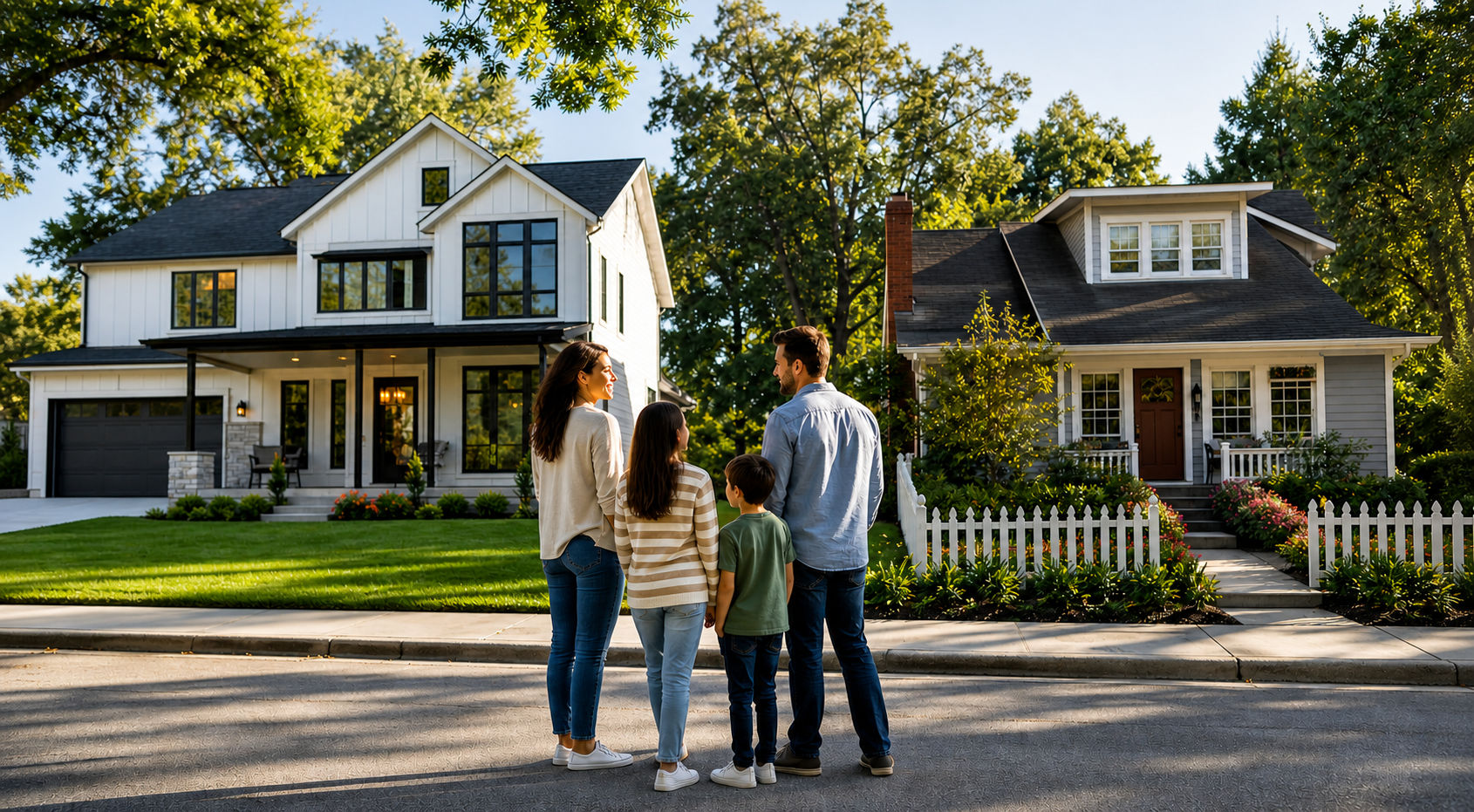
When choosing between building a custom home and buying an existing one, most families naturally think about what each option means today. How much will the home cost? How quickly can you move in? Does the floor plan work? Will you need to renovate?
There is another question worth considering, especially if you expect to own the home for many years:
Does building custom vs. buying existing affect long-term home value?
The answer is more nuanced than saying one option always produces a better financial return.
A custom home is not automatically worth more simply because it was custom-built, just as an existing home is not automatically a weaker investment because it is older. Location, lot, condition, square footage, construction quality, market conditions, and comparable sales can all influence value.
Where custom building can make a meaningful difference is in the decisions you are able to make from the beginning. A thoughtful floor plan, durable materials, useful spaces, energy-efficient features, and a desirable homesite can help create a home that works well for your family now while remaining functional and appealing over time.
For families comparing existing homes with custom homes in Northeast Ohio, long-term value is best understood as more than the eventual selling price. It is also about what you may need to spend on the home while you own it and how well the property continues to serve you.
What Actually Determines a Home's Long-Term Value?
It is important to separate cost from market value.
Spending more to build or improve a home does not guarantee that every dollar will come back when the property is eventually sold. Appraisers and buyers evaluate a home in the context of its local market.
Freddie Mac's guidance on what appraisers typically look at during a home appraisal includes factors such as location, lot size, comparable properties, market conditions, living area, room count, garage and driveway characteristics, overall condition, and certain energy-efficient features.
That means the custom-versus-existing question cannot be considered in isolation. A beautifully designed custom home in one location and an older existing home in another are not directly comparable simply because one was built new.
The better question is whether the choices made when buying or building support the property's usefulness, condition, marketability, and appeal over the years you expect to own it.
How Building a Custom Home Can Support Long-Term Value
One advantage of building a custom home is that you begin with decisions rather than inherited compromises.
When purchasing an existing house, the floor plan, window locations, garage, kitchen layout, storage, mechanical systems, and many other major elements have already been determined. If those features do not fit your needs, you have to decide whether to live with them or invest in renovations.
With a custom home, those conversations happen before construction.
Lemmon Custom Homes' custom home plans provide starting points that can be personalized around a family's lifestyle, preferences, and needs. That might mean changing the kitchen, incorporating a home office, adjusting bedroom space, or selecting finishes that make sense for how the owners expect to live.
From a long-term value perspective, the benefit is not customization for its own sake. It is the opportunity to make thoughtful choices before the house is built rather than correcting avoidable compromises later.
A Functional Custom Home Floor Plan May Age Better Than a Highly Personalized One
There is an important distinction between personalized and overly specialized.
A custom home should fit its owners, but long-term value is better supported when that personalization still produces a functional home.
Consider a first-floor primary suite, practical mudroom, generous pantry, useful storage, flexible office or guest room, and a comfortable connection between the kitchen and living spaces. Those choices can make a home work well for the original owners without making it difficult for another family to understand or use the space later.
Extremely specialized decisions can be different. Removing bedrooms to create unusually large hobby spaces, designing rooms with only one narrow purpose, or choosing a highly unconventional layout may be perfect for one homeowner but less appealing to a future buyer.
This does not mean you should design your custom home for someone else. You are building it to live in. It simply means good custom design can balance personal priorities with lasting functionality.
That balance matters because appraisal standards also recognize marketability. Freddie Mac's appraisal guidance, for example, instructs appraisers evaluating unusual floor plans to consider whether similar layouts are found elsewhere in the market and how the design affects the property's marketability.
%20-%202026-09-03T183905.740.png?width=1280&height=720&name=Featured%20Image%20Size%20(1280%20x%20720%20px)%20-%202026-09-03T183905.740.png) Building New Can Reduce the Need to Undo Someone Else's Choices
Building New Can Reduce the Need to Undo Someone Else's Choices
Buying an existing home can be an excellent option when the property already offers the location, condition, layout, and features you want. In that situation, there may be little reason to make substantial changes.
The calculation changes when an existing home requires significant work.
A buyer might purchase a house and then replace flooring, remodel the kitchen, update bathrooms, change lighting, replace aging mechanical equipment, reconfigure rooms, or finish a basement. Some of those improvements may contribute to market value, but they also represent additional spending after the home has already been purchased.
The question becomes particularly important when the changes are structural. Moving walls, reworking plumbing, expanding a kitchen, or adding space is considerably different from changing paint or countertops.
Custom building allows many of those decisions to be incorporated into the original plan. Instead of paying for an existing feature and then paying again to replace it, homeowners can direct more of their initial investment toward the home they actually want.
That does not guarantee a higher resale price. It can, however, change the total cost of getting from the house you purchased to the house you ultimately want to live in.
Energy Efficiency Can Become Part of a Home's Long-Term Value
One area where newer homes can have a measurable value advantage is energy performance, although the specifics depend on how a home is designed, constructed, equipped, and documented.
The U.S. Environmental Protection Agency's ENERGY STAR program has published research on energy efficiency and home resale value showing that studies of rated energy-efficient homes, including ENERGY STAR certified homes, have found resale price premiums in many markets.
That does not mean every newly built home receives an automatic resale premium, nor does it mean every custom home meets ENERGY STAR certification requirements. It does show that the market can recognize energy performance as a value-related characteristic.
Freddie Mac's appraisal requirements reinforce the point by instructing appraisers to identify qualifying energy-efficient features and consider their impact on market value based on market reaction.
For someone building today, this creates an opportunity to think about insulation, windows, HVAC performance, and other efficiency decisions during planning rather than treating them solely as upgrades to consider years later.
New Construction Starts With New Materials and Systems
Age alone does not determine a home's value. A well-maintained older home can remain extremely desirable, while a newer home that has been poorly maintained can develop problems quickly.
Still, building new changes the starting point.
The roof, windows, HVAC equipment, plumbing, electrical components, finishes, and appliances begin their service lives with the homeowner rather than arriving with an unknown number of years already behind them.
An existing home may have many years of useful life remaining in those systems. Alternatively, a buyer could face several major replacement projects during the first years of ownership.
Those expenses do not always show up when buyers compare purchase prices. For long-term planning, it is helpful to look beyond what each home costs at closing and consider what may need to be repaired, renovated, or replaced during the period you expect to own it.
Location Still Matters Whether You Build Custom or Buy Existing
Customization cannot overcome every factor affecting real estate value, and location remains one of the most important.
The homesite affects the neighborhood, schools, commute, privacy, surroundings, access, lot size, and other characteristics that future buyers may consider. It also influences the home itself. Lot shape, orientation, terrain, utilities, and community requirements can all affect what can be built and how the finished property functions.
This is why choosing where to build deserves as much thought as choosing what to build.
Lemmon Homes builds on client-owned land, secured lots, and homesites in developments throughout the Akron-Canton area and Northeast Ohio. Homeowners considering a custom build can review where Lemmon Homes builds while thinking about how the location fits both their current lifestyle and longer-term plans.
A strong home on the wrong property for your priorities may still feel like a compromise. The home and homesite need to work together.
Does Customization Add Dollar-for-Dollar Resale Value?
Usually, this is the wrong expectation to bring to a custom build.
If you spend more on cabinetry, an elaborate primary bathroom, specialty millwork, a larger covered porch, or another feature you personally value, there is no reliable rule saying a future buyer will pay exactly what that feature cost.
Market value is not calculated by adding up receipts.
Fannie Mae's guidance on how comparable sales are evaluated emphasizes appropriate comparable properties and considers characteristics including the site, room count, finished area, style, and condition.
This is an important principle for custom homeowners. Some choices primarily create personal value, while others may have broader market value.
A feature can still be worth including even if it does not promise a dollar-for-dollar financial return. If a covered porch makes your home substantially more enjoyable for the 15 years you live there, its value to your family is real even if a future appraisal cannot isolate every dollar spent on it.
A thoughtful custom-building process helps homeowners understand their priorities so they can spend intentionally rather than treating every upgrade as an investment that must eventually pay for itself.%20-%202026-09-03T184111.795.png?width=1280&height=720&name=Featured%20Image%20Size%20(1280%20x%20720%20px)%20-%202026-09-03T184111.795.png)
Buying an Existing Home Can Also Offer Strong Long-Term Value
There are circumstances where buying existing makes very good financial and practical sense.
An existing home may place you in a neighborhood where new lots are unavailable. It may have mature landscaping, a desirable location, a floor plan that already suits you, or improvements completed by previous owners. If the house is in good condition and requires little renovation, the value proposition can be compelling.
Existing homes also give buyers more information about the established neighborhood and surrounding property values. There are typically completed sales nearby that help establish how similar homes are being valued by the market.
The tradeoff is that you are buying someone else's decisions along with the property.
If those decisions align with your needs, that may not matter. If you immediately begin planning a new kitchen, different layout, additional storage, updated mechanical systems, and a major addition, the comparison with building custom starts to change.
The purchase price alone does not tell you which path offers better long-term value.
Custom vs. Existing Home: Think About Total Value, Not Just Resale Value
The financial side of homeownership matters, but resale price is only one part of the value a home provides.
Suppose you build a home with a floor plan that works for your family from the first day, enough storage to remain organized, spaces that can adapt as your needs change, and finishes you do not expect to replace simply because you dislike them. If you live there for many years, those decisions provide value throughout your ownership.
Now consider an existing home purchased for less but followed by several rounds of remodeling to solve functional problems. Some of that investment may improve the property, but it also represents money, time, and disruption required to make the home work the way you wanted.
Neither scenario is automatically the better investment. The meaningful comparison is the total value of ownership: what you spend to buy or build, what you spend maintaining and changing the home, how well it serves you while you live there, and what the market ultimately values when you sell.
Custom building offers greater control over many of those variables. You can choose the homesite, refine the floor plan around the way you live, make material and finish decisions before construction, and consider future flexibility from the beginning. That control does not guarantee greater appreciation or a higher resale price, but it can help you direct more of your housing investment toward a home that fits your priorities from day one.
For families comparing an existing home with building a custom home in North Canton or elsewhere in Northeast Ohio, it helps to look beyond the initial price of each option. Consider the renovations an existing home may require, the choices you would make differently, how long you expect to stay, and what matters most in the way your home functions.
If building custom begins to make sense, Lemmon Custom Homes can help you evaluate what those priorities could look like in a home planned around them from the start.